软件架构与设计 第 3 课 Basic Concepts
本页目录
在总体介绍了软件架构之后,这一讲主要介绍基本的概念,为之后的深入夯实基础。其中很多定义不是特别好翻译,就直接引用英文原文了。
什么是软件架构:A software system's architecture is the set of principal design decisions about the system.
主要包括:
- 结构
- 行为
- 交互
- 非功能属性 NFP
什么叫做 Principal?
意味着这个设计决定的架构状态,说明并不是所有的设计决定都是架构级别的;具体的标准就有软件开发的目标决定。
从时间的角度来看,在每个给定的时间点,有且仅有一个架构,而架构本身也是在不断变化的。
Prescriptive vs. Descriptive Architecture
这是一个比较重要的概念,所以给出英文原文:
- A system's prescriptive architecture captures the design decisions made prior to the system's construction.
- It is the as-conceived or as-intended architecture
- A system's descriptive architecture describes how the system has been built
- It is the as-implemented or as-realized architecture
对于这两个概念,可以这么理解,prescriptive 是指在没有开发之前进行的设计,如果用盖房子来做例子,就相当于设计图纸;而 decriptive 则是指在软件开发出来之后,我们用来描述的架构,等于是房子已经盖好了,我们通过观察得到的架构。
这两种架构很多时候是不一样的,毕竟从纸上的设计到最终的制品,会有各种变化。当系统进化的时候,理想状况下首先修改 prescriptive architecture,而在实际生活中,通常就直接堆系统,也就是 descriptive architecture 进行改动了。有很多原因,例如:
- 开发者马虎偷懒
- 截止日期临近没有办法详细思考并撰写文档
- 缺少 prescriptive architecture 的文档
- 需要进行代码优化
- 技术和工具支持不足
Architecural Degradation 架构退化
包含两个相关的概念:架构漂移 Architectural drift 和 架构腐烂 Architectural erosion.
架构漂移指的是在 descriptive architecutre 中引入的重要设计决定没有包含在 prescriptive architecture 中,但是没有违背其设计决定。
架构腐烂指的是在 descriptive architecutre 中引入的重要设计决定违背了 prescriptive architecture 中的设计决定。
因为这种情况的发生,所以我们需要架构恢复,也就是实现层面上检查软件系统的架构,找出违背设计决定的地方并进行修正
Deployment 部署
就是把程序放到它应该运行并发挥作用的地方。需要考虑的问题有:
- 可用的内存
- 能源消耗
- 需要的网络带宽
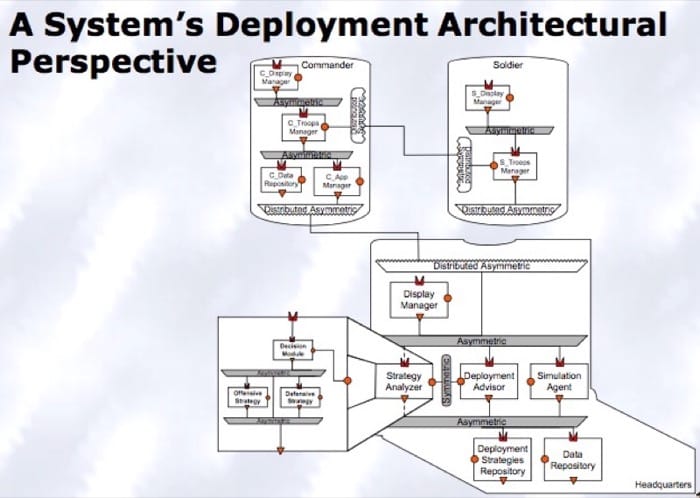
一个软件系统的架构通常不是,也不应该是一个单一庞大的组织,而应该是不同元素的组合和互动。
Components 组件
定义:
- 封装了系统功能和/或数据的一个子集
- 通过显式定义的接口来限制访问
- 有明确定义的执行所需的上下文
组件通常提供应用相关的服务
Connectors 连接器
定义:连接器是影响和规范不同组件间交互的架构模块。
在复杂的系统交互中,连接器的作用比组件本身还要大。在许多软件中连接器只是简单的过程调用或者共享数据访问,但更加复杂的连接器是存在的。
Connectors typically provide application-independent interaction facilities.
一些连接器的例子:
- 过程调用连接器
- 共享内存连接器
- 消息传递连接器
- 流连接器
- 分布式连接器
- 包装/适配连接器
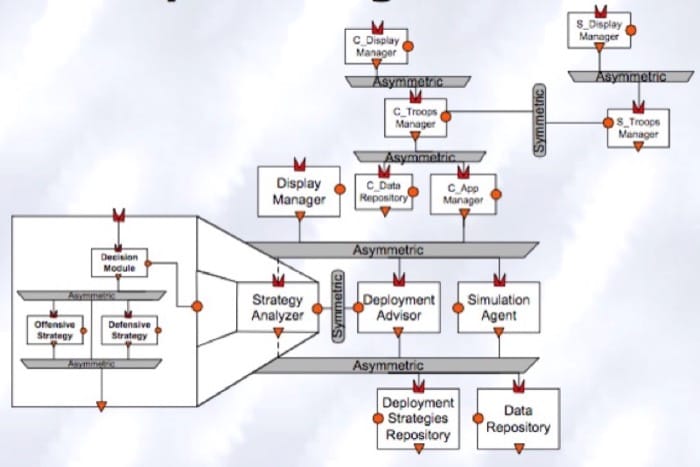
Configurations 配置
定义:An architecural configuration, or topology, is a set of specific associations between the components and connectors of a software system's architecture.
一个例子:
Architectural Styles 架构风格
定义:
An architectural style is a named collection of architectural design decisions that
- are applicable in a given development context
- constrain architecural design decisions that are specific to a particular system within that context
- elicit beneficial qualities in each resulting system
Architectural Patterns 架构模式
定义:
An architectural pattern is a set of architectural design decisions that are applicable to a recurring design problem, and parameterized to account for different software development contexts in which that problem appears.
在现代分布式系统中广泛应用三层(three-tiered)系统模式

- Front Tier: 包含用户界面并以此访问系统服务。
- Middle Tier: 包含应用的主要功能
- Back Tier: 包含应用的数据和存储功能
其他的一些概念:
- Architecture Model: An artifact documenting some or all of the architectural design decisions about a system
- Architecture Visualization: A way of depicting some or all of the architectural design decisions about a system to a stakeholder
- Architecture View: a subset of related architectural design decisions
Architectural Processes 架构过程
- 架构设计
- 架构建模与可视化
- 架构驱动的系统设计
- 架构驱动的系统实现
- 架构驱动的系统部署,运行时重部署,以及灵活性
- 针对非功能属性基于架构的设计,包括安全和信任
- 架构适配
Stakeholders in a System's Architecture
- 架构师
- 开发者
- 测试者
- 管理者
- 消费者
- 用户
- 销售者
相关文章
- 软件架构与设计 习题课 6 设计模式进阶练习2016-03-30
- 软件架构与设计 习题课 5 设计模式练习2016-03-20
- 软件架构与设计 第 20 课 设计模式2016-03-17
- 软件架构与设计 第 19 课 People, Role, Teams2016-02-27